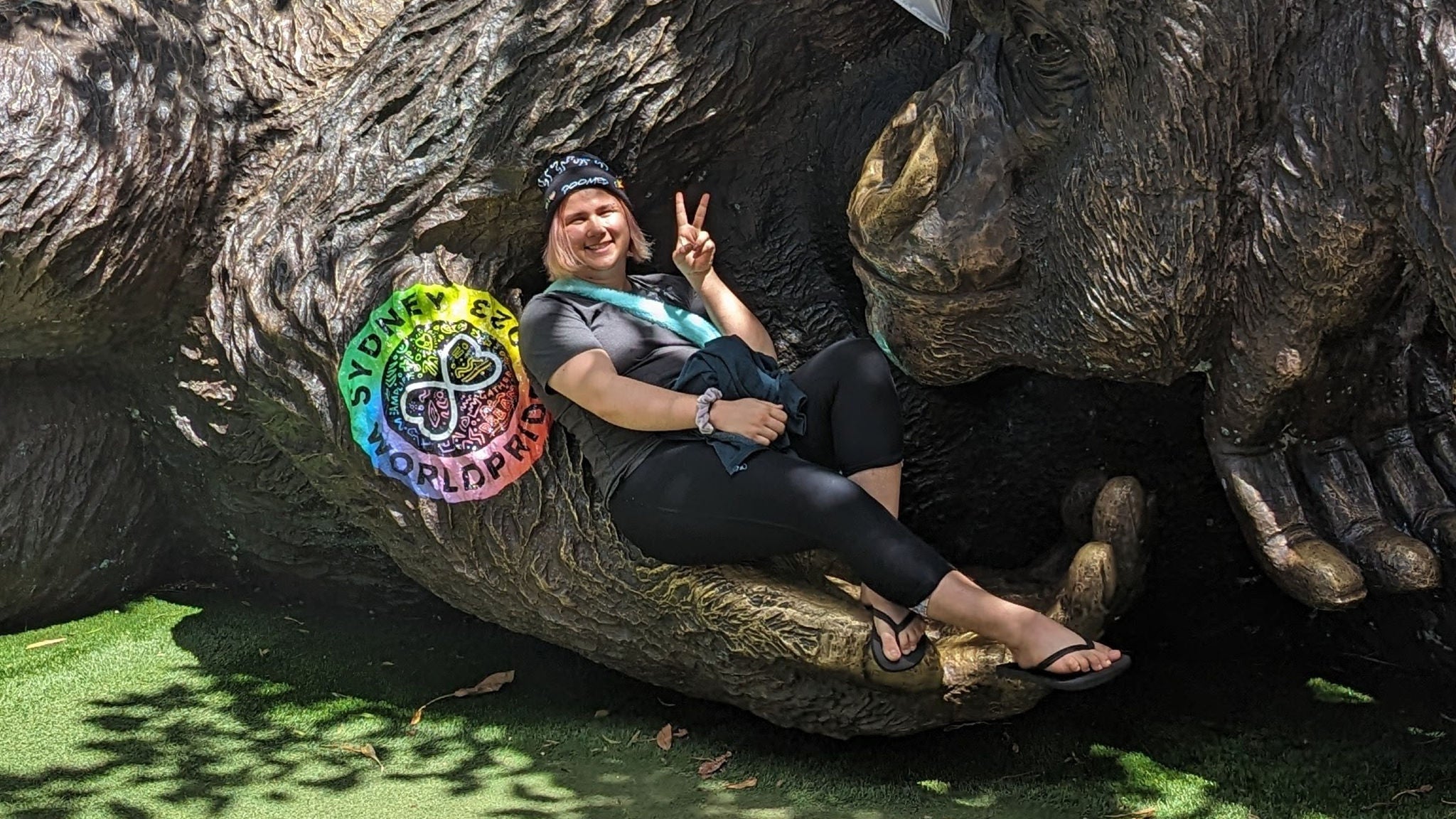
But Connor’s trans journey hasn’t always been easy. Like other trans people, he too has experienced discrimination and judgement in the workplace.
“Transphobia is still a real threat. I had been personally let go from a previous job when I had advised I was transgender as a teenager,” he said.
According to recent statistics on the Victorian government website, 77.7 per cent of trans and gender diverse Victorians have faced unfair treatment based on their gender identity1 —including social exclusion, verbal abuse and harassment.
This is despite the fact people who are transgender are protected from discrimination by law. This means it is against the law for a business to discriminate a person because of their sex, sexual orientation, intersex status, family or relationship status—or gender and identity.
And yet, Connor’s past experience shows there is still work to be done to improve the lives and rights of trans people. In 2019, the WHO officially stopped classifying transgender health issues as ‘mental and behavioural disorders’2 —a positive step forward for trans people worldwide, albeit a change that was surprisingly recent.
“Transgender people and gender diversity has existed for thousands of years, and our existence is our truth. We are not a debate, we are human,” he said.
Creating a trans-inclusive workplace
As part of Australia Post’s longstanding commitment to creating a more accessible and inclusive workplace environment for our team members and communities, there are several initiatives that bring our values to life—like the Rainbow Peer Support Group, established by team member Stu Reynolds to provide a safe and supportive outlet for other LGBTQIA+ colleagues.
In fact, Connor joined the group to pay forward the kindness he experienced when first joining Australia Post. “I have since joined the Rainbow Peer Support Group to be that help for others who need a steppingstone in their journey,” he said.
And it doesn’t stop there. Similar to our Access & Inclusion Plan (PDF 8MB) and Reconciliation Action Plan, we’re also developing a Gender Equality Action Plan to help ensure we are progressing gender equality within our organisation, and to help businesses around Australia develop a cohesive Diversity & Inclusion in the Workplace policy.
For other businesses looking at ways to create a more diverse workplace, proactive steps include, updating policies to be more LGBTQIA+ inclusive; providing inclusive facilities like gender-neutral toilets; starting a network support group; and sharing messages of support across internal communications.
Connor’s final advice for anyone navigating the often-complex topic of gender identity inside or outside the workplace:
“I would encourage people to make conversation and talk to and about the LGBTQIA+ community. I would like to encourage people to normalise asking and using preferred pronouns, to include gender diverse people in conversation and validate their identity,” he said.
“If you know someone personally, take a moment to reach out and remind them that you are an ally for them.”