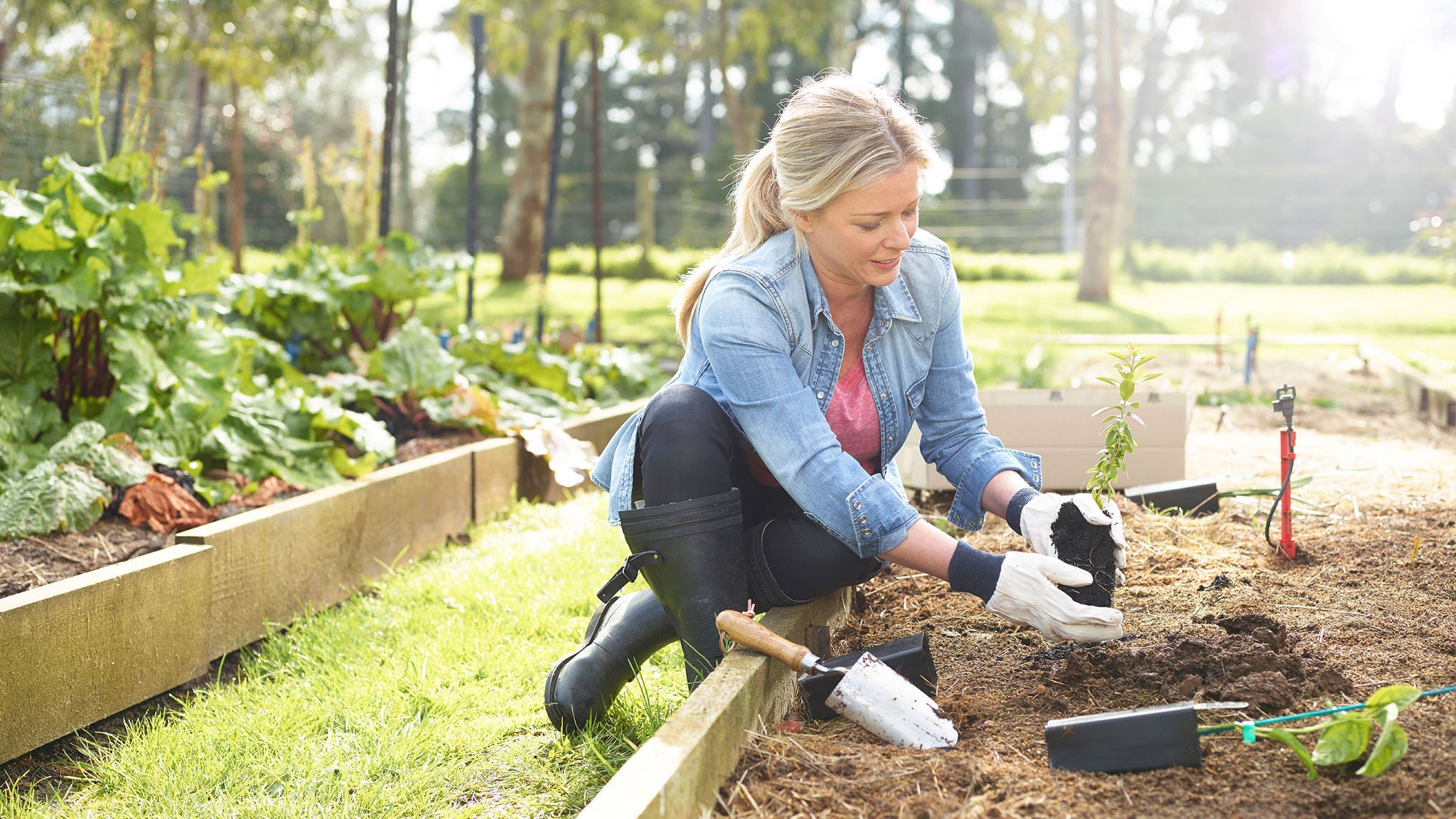
Caregivers so often put others’ needs ahead of their own. That’s why there are community groups dedicated to helping carers to look after their own mental wellbeing. Read more about how a Community Grant can support this goal.

Read transcript

Video: The Australia Post logo sits in the bottom right corner. A woman with wavy blonde hair opens a gate in a tall wooden fence, revealing three women. As they enter the garden, they hug her. A visitor with long blonde hair is interviewed in the stylish garden.

Audio: Woman: The challenges are endless when you're caring for a child with a disability. It's very, very isolating, very lonely, and you're so busy empowering and advocating for your child that you forget about yourself.

Video: The garden is outside a large weatherboard house. Large sliding doors open to a covered deck. White text reads, "Introducing Special Needs Fraser Coast, a 2020 Australia Post Community Grant Recipient."
The blonde visitor stands in the garden.
Text: "Karen Baker, Director of Special Needs Fraser Coast."
Inside, the three visitors eat sushi around a coffee table.

Audio: Karen: Special Needs Fraser Coast is there to support families that are impacted by disabilities. My daughter was diagnosed with a disability and there was no support around. Get Your Happy On is an opportunity for carers to put ourselves first for a change.

Video: Karen helps the woman with wavy blonde hair arrange armchairs on the deck. The woman is interviewed.
Text: "Kimberley Robyn, Wellness Coach, Get Your Happy On."

Audio: Kimberley: It's designed to provide some socialisation for parents who are obviously, sometimes, isolated. I also teach them certain breathing techniques that they can use in an emergency, as well as meditation, relaxation.

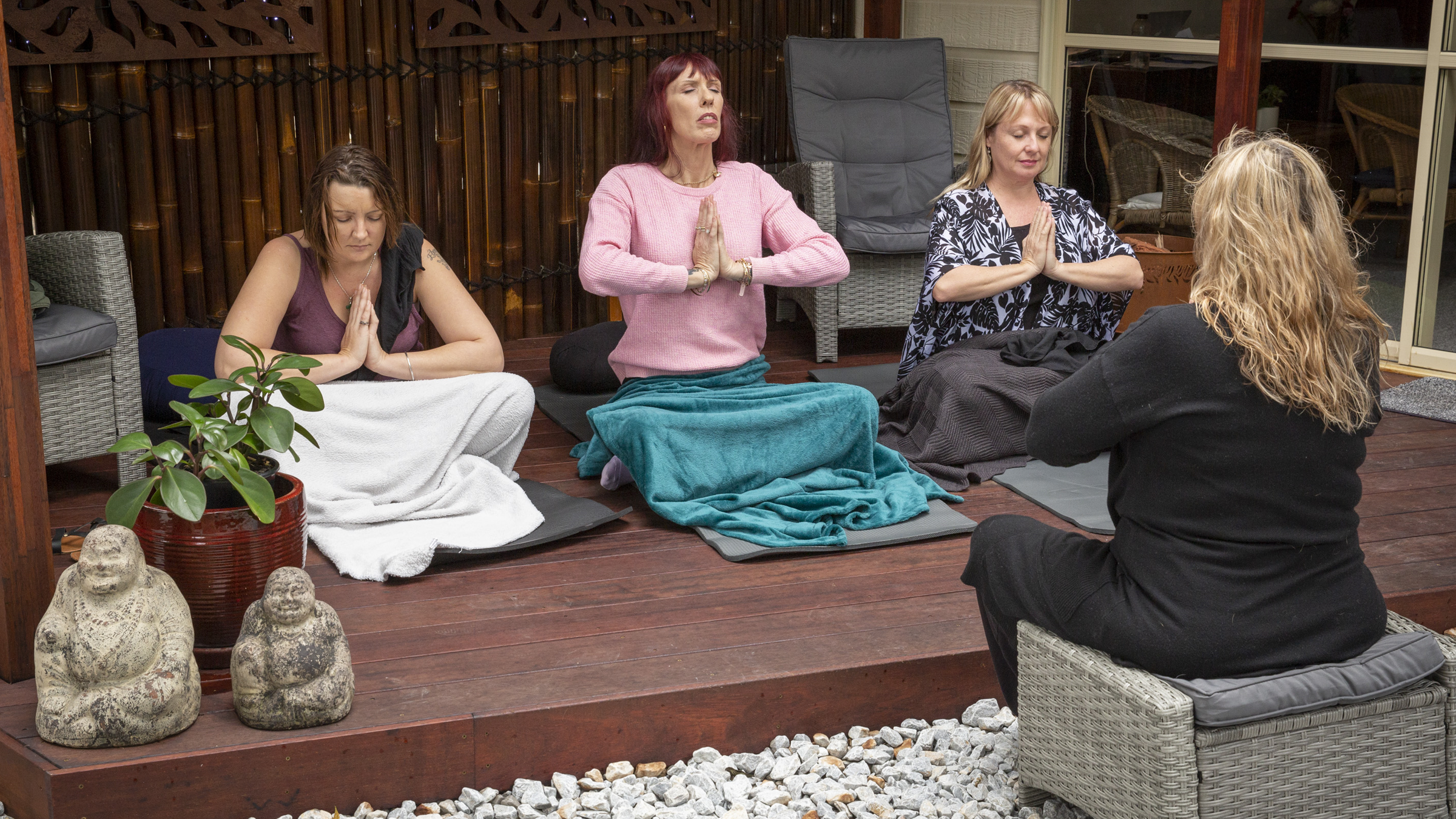
Video: Kimberley runs a session. The three visitors meditate in the armchairs, then do breathing and stretching exercises in the garden. Kimberley's interview continues.

Audio: Kimberley: This grant from Australia Post has been so, so special and so much appreciated. There really has been nothing like this out there for carers. It normalises mental health strategies. It's had such a ripple effect. The mums take it home to the families and the kids, but then it's getting out to the wider community.

Video: A dark-haired participant is interviewed. Text: "Hannah, Workshop Participant."

Audio: Hannah: I found it a lot easier to connect with my children by being able to do the exercises. I've even got my daughter doing meditation with me now, which is awesome.

Video: The woman mediate sitting cross-legged on mats.

Audio: Kimberley: Connection is so important in mental health. The really strong bonds, the friendships and the support that they have within the group is so, so rewarding and something that I think will continue long into the future.

Video: The women relax on the deck. Kimberley has a small dog on her lap.

Audio: Karen: I think if we can make somebody else's journey a little bit easier, then we're doing a good thing.

Video: The Australia Post logo appears on a red screen.
Below, text reads, "When we connect, we feel better. auspost.com.au/grants."
Caregivers are known for putting others first, often at a high cost to their own wellbeing, and without proper support networks.

When Special Needs Fraser Coast surveyed local caregivers about their experiences of parenting a young person with a disability, they discovered feelings of social isolation and anxiety. The parents described these challenges as major barriers to accessing community events and support groups.

Karen Baker, founder and director of Special Needs Fraser Coast, has long felt that this is a problem that needs to be addressed within communities, which is why she created a way to do just that.

“The challenges are endless when you’re caring for a child with a disability. It’s very isolating, very lonely, and you’re so busy empowering and advocating for your child that you forget about yourself,” says Karen.

Women meditating on veranda

When caregivers take some time out to look after their mental wellbeing, there are positive ripple effects into the community.

The initiative inspired by personal experience

Special Needs Fraser Coast is operated by volunteers, with goals to provide informal and free peer support for young people with a disability, their families and carers.

Karen was inspired to help others through her own parenting experiences. “My daughter was diagnosed with a disability and there was no support around,” she says, “and so it's always been a dream of mine to help the carers and start an opportunity for carers to put ourselves first for a change.”

In the early days, Special Needs Fraser Coast existed only as a Facebook page for the parents of children with a disability, with the aim of being a safe place to learn, grow and support each other. In recent years the association has grown but remains a place for caregivers to learn and support themselves and others.

Part of that growth has been in creating events and activities that connect people. Special Needs Fraser Coast now facilitates a successful inclusive singing choir, and a Sunday soccer and barbecue afternoon, where families can meet to feel safe and supported, make new friends and catch up with long-held connections.

“I've made some very deep, lifelong friends with other carers because we understand one another, we understand the hardships,” Karen says, adding that these relationships help to ease the challenges. “I think if we can make somebody else’s journey a little bit easier, then we’re doing a good thing.”

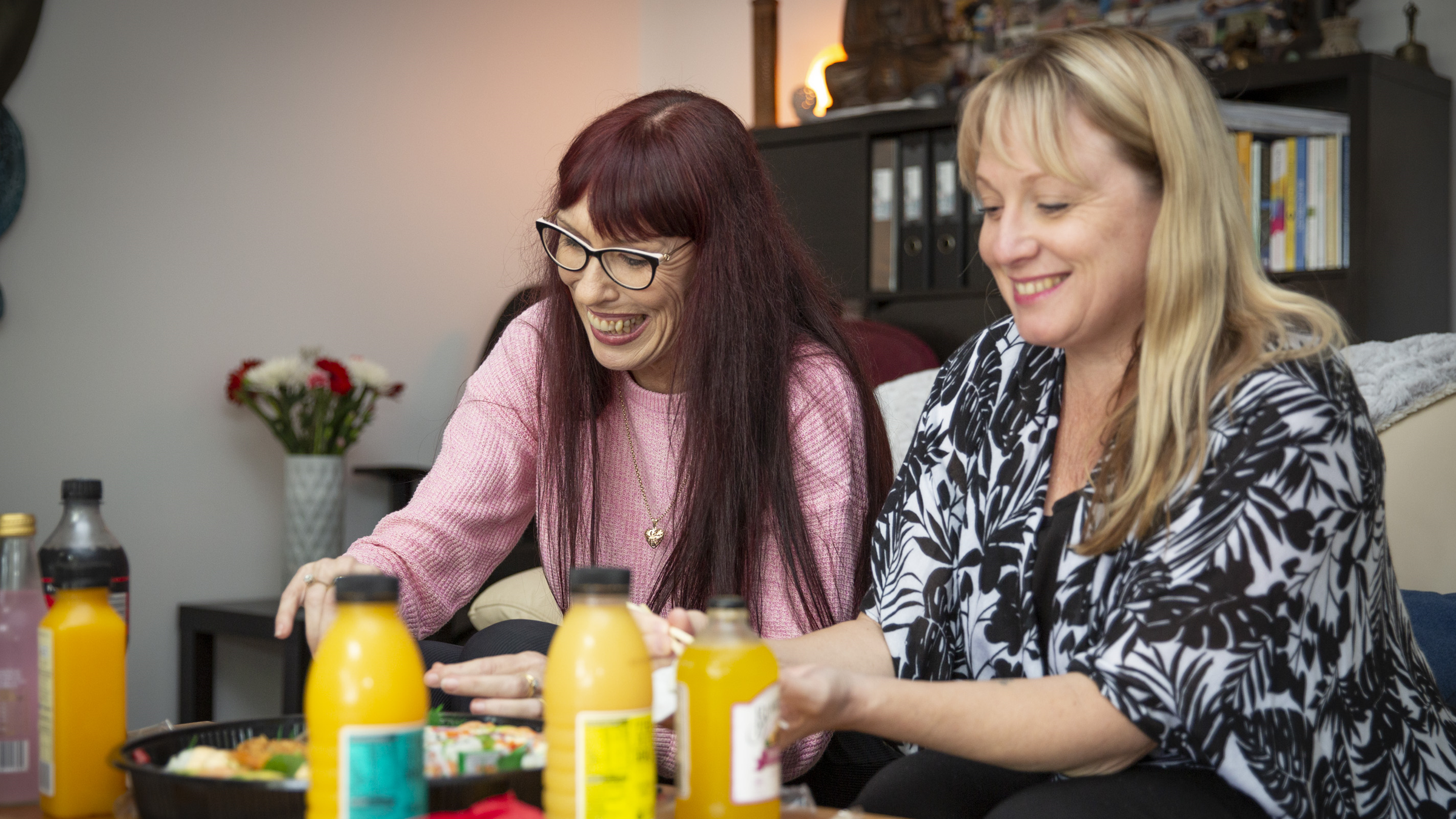
Two women smiling over breakfast

Caregivers are given a range of self-care strategies to utilise in their own lives.

Get Your Happy On: a new initiative that puts parents and carers first

It was this desire to reach out, and to help parents and carers, that inspired Get Your Happy On, the new initiative from Special Needs Fraser Coast.

Funded by an Australia Post Community Grant, Get Your Happy On is a series of evidence-based workshops for caregivers of children with a disability. The workshops teach self-care tools, resilience strategies, and coping techniques such as breathing and meditation. This results in the caregivers being able to better manage their mental and emotional health and gives them the confidence to participate in the community.

“It normalises mental health strategies,” explains Kimberley Robyn, a wellness coach and creator of Get Your Happy On. “And it has a ripple effect. The mums take it home to the families and the kids, and then it’s getting out to the wider community.”

The workshops are also a time for parents and carers to socialise with others who understand what they’re going through, as well as having some time out. Giving caregivers the opportunity to put themselves first, which is so often a rarity for parents and carers of children with a disability, is a welcome relief to participants.

Kimberley believes that events like this create an important connection between people who need to gather support from others. “Connection is so important in mental health. The really strong bonds, the friendship and the support that they have within the group is so rewarding, and it’s something that I think will continue long into the future.”

info icon

Connecting local communities

Australia Post is delivering the goods for local communities with grants to support mental wellbeing. Because when we connect, we feel better.

Author

Megan Blandford

Megan Blandford is a lifestyle writer who's written for a number of businesses and publications including The Age, Sydney Morning Herald, SBS, news.com.au, Sunday Life, and more.