Being ready to act in an emergency isn’t just lifesaving. It also builds resilience and helps us recover after the event. This is especially important for children.
Research suggests that educating children in disaster preparedness can contribute to a culture of preparedness and resilience in the community as a whole.
Children may be vulnerable in an emergency, but they also have unique strength and capacity to prepare, cope and help their families through the event.
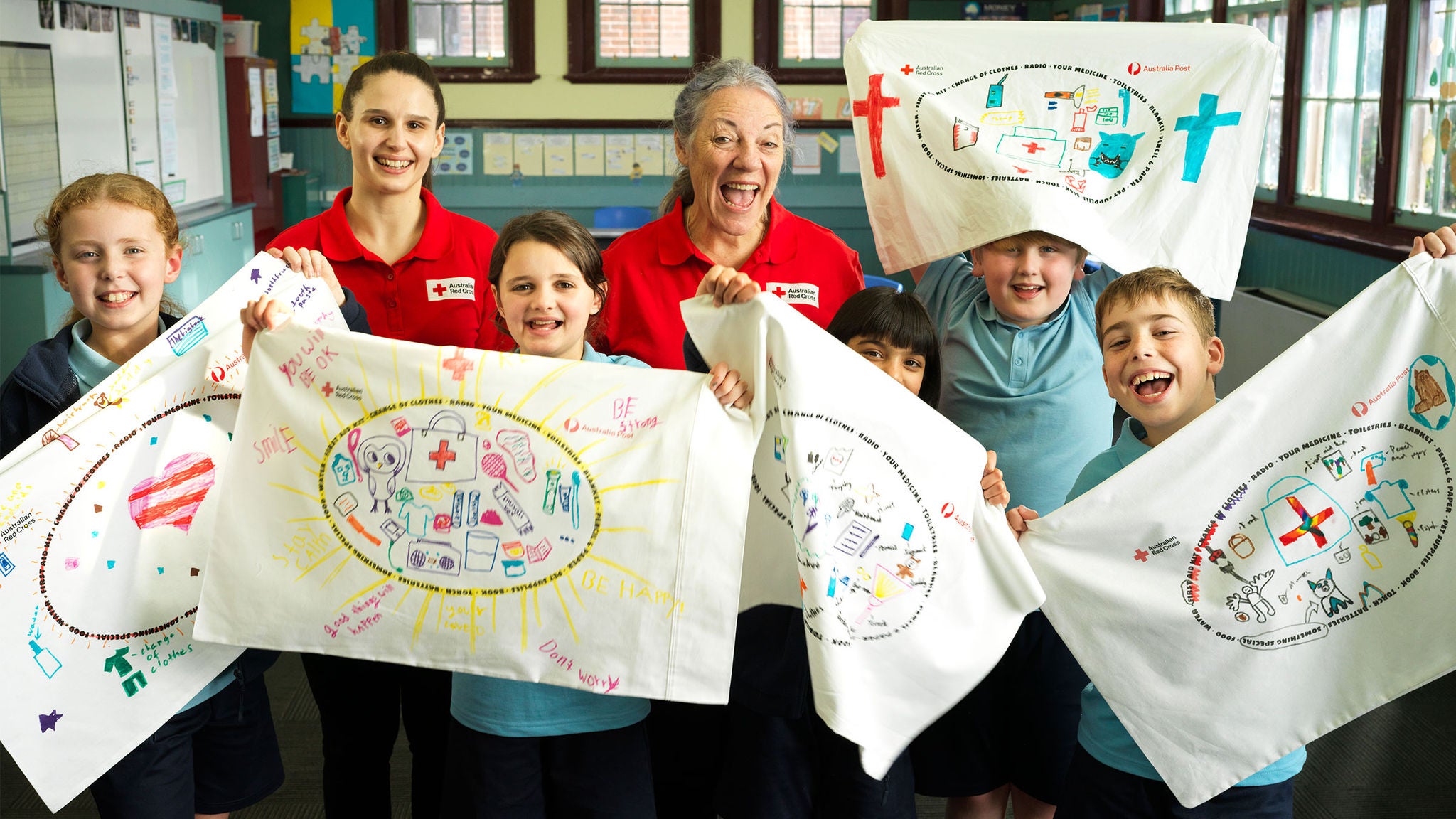
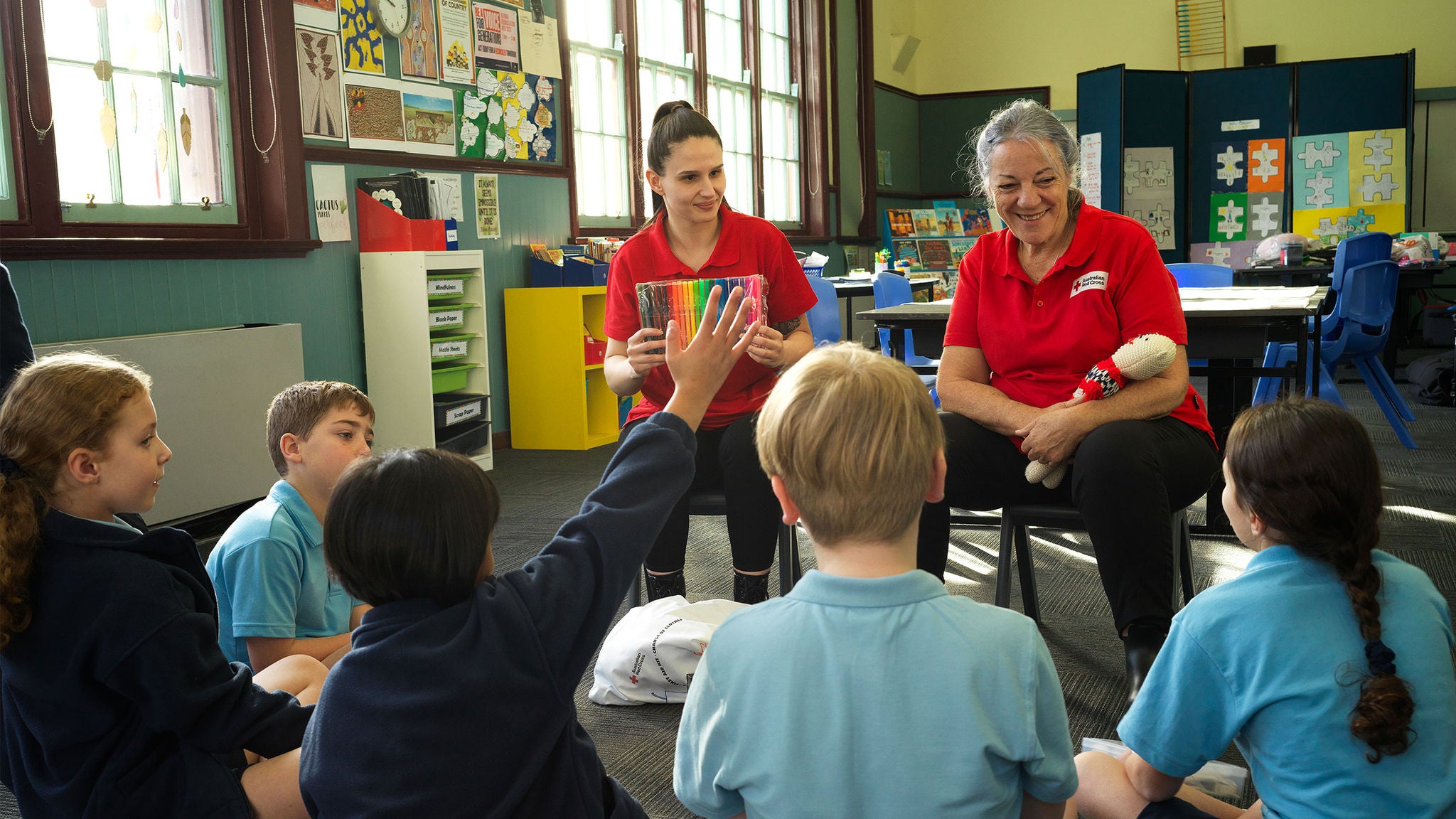
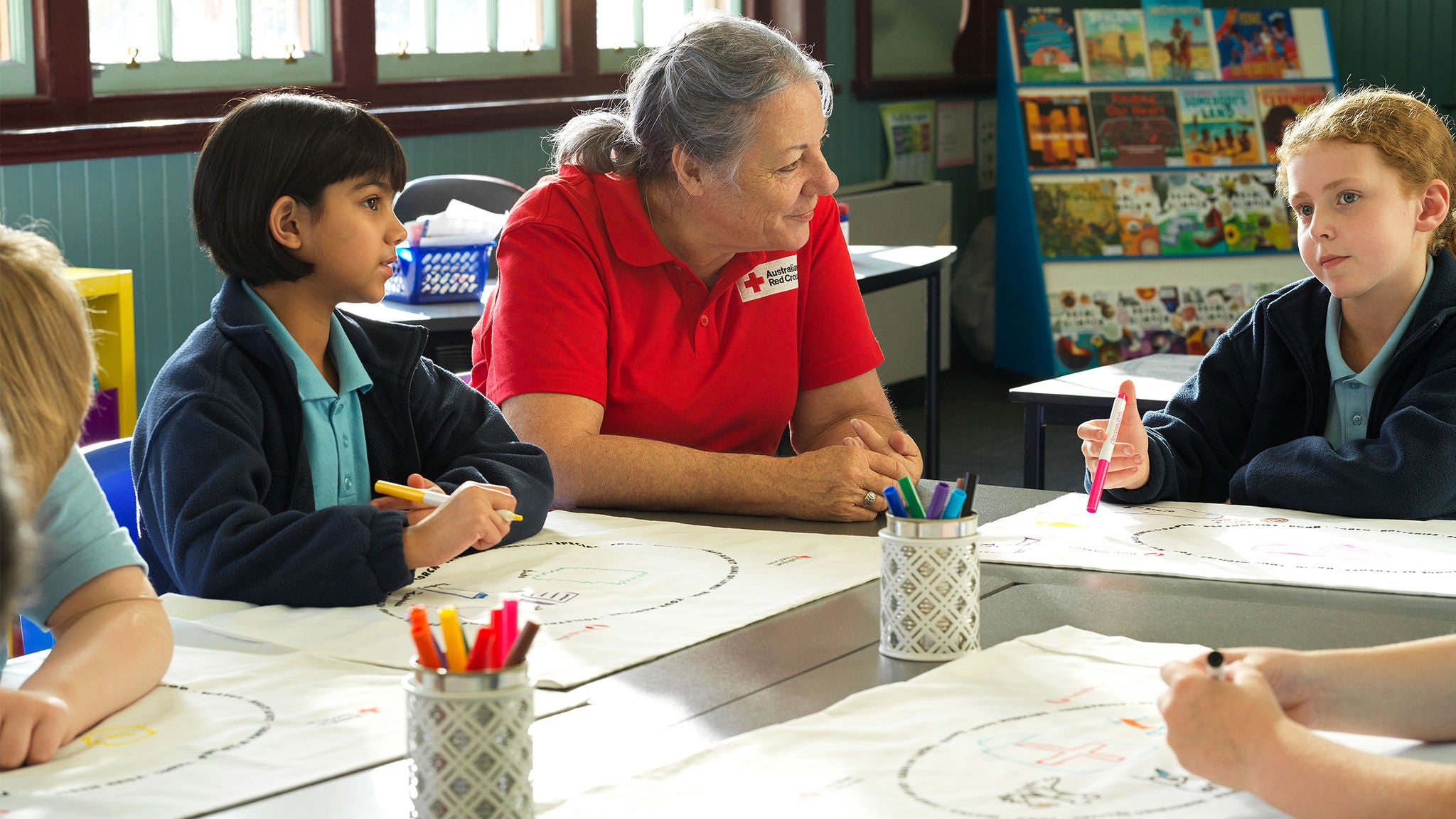
And Australian Red Cross is helping them do this through the delivery of Pillowcase Workshops.
A pillowcase is all you need
During Hurricane Katrina, a group of university students used pillowcases to carry their cherished and basic possessions while evacuating campus.
When American Red Cross staff heard this, they developed the concept of using a pillowcase as an emergency kit. This grew into a global disaster preparedness education program that’s now known as the Pillowcase Program.
Pillowcase, as it’s fondly known, is now run in Australian primary schools by Australian Red Cross and has also been delivered in other settings like scout groups and holiday programs.
In 2015, the program was adapted to suit the Australian Red Cross’ emergency preparedness framework and aligned to the Australian School Curriculum.
Since then, Pillowcase has been delivered to over 65,000 students through more than 2,2550 workshops in over 876 schools.
“Pillowcase aims to create a generation of children who understand the importance of emergency preparedness, know how to cope in an emergency and can share what they’ve learnt with others,” says Rhiannon Hunt, National Manager, Disaster Resilience at Australian Red Cross.
“This is one way we’re working alongside communities to strengthen resilience and prepare for disasters in every Australian state and territory.”